
Every time inflation rises, energy prices move higher, interest rates stay elevated and markets begin to worry about slower growth, the comparison with the 1970s comes back. It is not a random comparison. The 1970s and early 1980s were one of the most difficult and important economic periods of the modern era. What began as an energy shock became an inflation crisis, then a stagflation crisis, and eventually forced central banks to completely rethink the way they manage policy.
The world entered the 1970s after a long period of growth and confidence. After World War II, the United States was the center of the global financial system, the dollar was linked to gold, and Western economies enjoyed expansion, high employment and rising living standards. But beneath the surface, cracks were already forming. The United States was financing the Vietnam War, expanding social spending and injecting too much money into the system. In 1971, President Nixon ended the dollar’s convertibility into gold, effectively ending the Bretton Woods system. The world moved into an era of floating currencies, where trust in economic policy and central banks became the main anchor.
Then came oil. In 1973, after the Yom Kippur War, Arab oil-producing countries imposed an embargo on countries that supported Israel, especially the United States. Oil prices jumped sharply, and the Western world suddenly discovered how dependent it was on cheap energy. At the time, oil was far more than fuel for cars. It was central to transportation, manufacturing, heating, electricity, agriculture, plastics and logistics. When oil became more expensive, almost everything became more expensive. Production costs rose, transportation costs increased, heating and electricity bills jumped, corporate margins were squeezed and consumers were left with less disposable income.
This was not normal inflation driven only by strong demand. It was inflation coming from the cost side. The economy was not overheating because people were buying too much. It was under pressure because it became more expensive to produce, ship and live. This is where the word stagflation became famous again. Stagflation means high inflation, weak growth and rising unemployment at the same time. Until then, many economists believed that when unemployment rises, inflation should fall. The 1970s broke that logic. The world got rising prices, recession, unemployment and a deep loss of confidence in policy all at once.
One of the biggest problems was that inflation became a habit. Workers demanded higher wages because they expected prices to rise. Businesses raised prices because they expected wages and input costs to keep rising. Households tried to buy before everything became more expensive. Investors moved into real assets like gold, real estate and commodities. And when everyone behaves as if inflation will continue, they help make it continue. That is one of the most important lessons from that period: inflation is not just a number in the CPI report. It is also a state of mind.
Central banks reacted too slowly. At first, they believed the shock was temporary, mainly because of oil, and they were afraid to raise interest rates aggressively while the economy was already weakening. In practice, real interest rates were often too low. If interest rates are 7% but inflation is 10%, money is still cheap in real terms. That kind of policy does not really stop inflation. It allows it to become embedded. Then, in 1979, the second oil shock arrived after the Iranian Revolution and later the Iran-Iraq War. Energy prices jumped again, and this time it was clear that the problem was no longer only oil. It was a credibility problem.
That is when Paul Volcker entered the picture. As chairman of the Federal Reserve, Volcker understood that the real battle was not only against oil prices, but against inflation expectations. He pushed interest rates to extreme levels, close to 20% at the peak, and sent a very clear message to markets and the public: inflation would be broken, even if the price was recession. The price was heavy. Credit tightened, real estate suffered, businesses closed, unemployment jumped and the United States entered a deep recession in the early 1980s. But eventually it worked. Inflation came down, expectations cooled and confidence in the central bank slowly returned.
Once inflation was broken, the foundation was laid for a new era. Interest rates began to fall, the dollar strengthened, confidence returned, and in 1982 one of the greatest bull markets in history began. In a way, the 1980s were born out of the pain of the 1970s. The world moved into an era of stronger central banks, greater focus on price stability, more globalization, deregulation, larger financial markets and, later, a powerful technological revolution.
So what is happening today? We are not in the 1970s, but some of the same questions are back on the table. In recent years, the world again faced inflation that was not part of the plan. Covid disrupted supply chains, governments injected huge amounts of money, the war in Ukraine pushed energy and food prices higher, tensions in the Middle East added a risk premium, and the shift from full globalization to a more fragmented world created new costs. Suddenly, the world discovered that the era of free money, low inflation and zero interest rates may not return so quickly.
The first similarity is energy. Just like in the 1970s, oil, gas, electricity and transportation costs can still change the inflation picture very quickly. The difference is that today’s economy is less dependent on oil than it was back then. There are more services, more software, more technology, more energy efficiency and more alternative energy sources. Still, if energy prices rise sharply, it reaches consumers’ wallets and corporate profit margins very quickly.
The second similarity is sticky inflation. It is not at 1970s levels, but it is also not disappearing as easily as many hoped. This is especially true in services, wages, housing and structural costs. That is exactly what central banks fear. Not the one-time jump, but the risk that households and businesses become used to higher inflation and start behaving accordingly.
The third similarity is the central bank trap. If central banks cut rates too quickly, they may reignite inflation. If they keep rates too high for too long, they may hurt growth, real estate, leveraged companies and financial stability. This resembles the 1970s, but with one important difference: today’s central banks know the history. They know what happened when policymakers reacted too late.
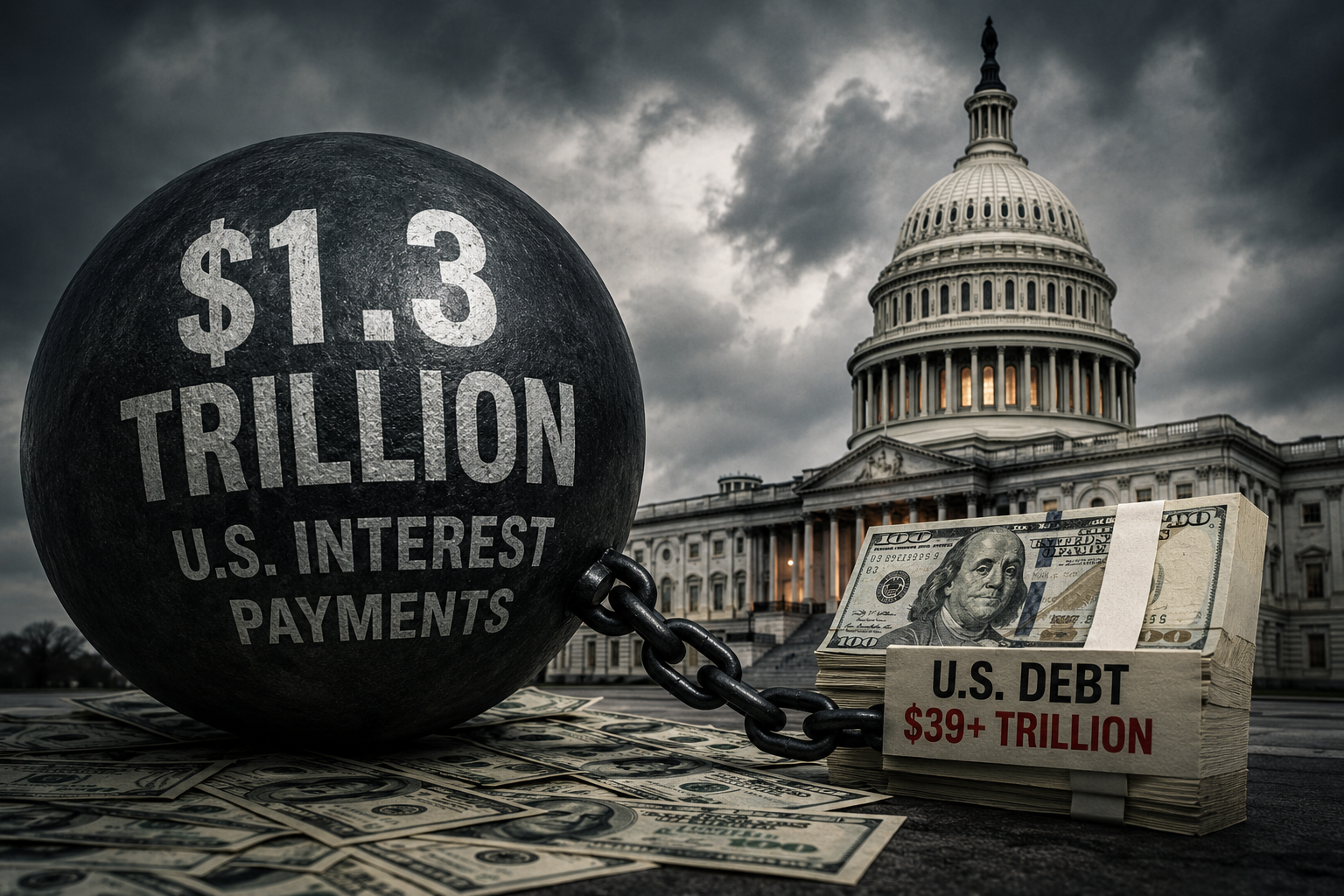
The biggest difference between then and now is debt. In the early 1980s, debt levels were much lower. Today, governments, companies and households live in a much more leveraged world. That means interest rates do not need to reach 20% to cause damage. Even 4% or 5% can be very meaningful when the entire system was built on years of cheap money. Governments pay more to service debt, companies struggle to refinance, households pay more on mortgages and credit, and real estate becomes much more sensitive.
Another major difference is market valuation. In the early 1980s, after a very difficult decade, stocks were relatively cheap, valuations were low and pessimism was high. So when inflation finally broke and rates started falling, the foundation for a huge bull market was already there. Today is different. Large parts of the market, especially technology, semiconductors, artificial intelligence and digital infrastructure, are priced for very high expectations. That does not necessarily mean there is a bubble, but it does mean markets are more sensitive to disappointment, especially if interest rates stay higher for longer.
On the other hand, there is one force today that did not exist at the same scale in the 1970s: technology. Artificial intelligence, automation, software, robotics, cloud computing and productivity improvements can reduce costs over time and soften some inflationary pressures. This does not eliminate the risks from energy, debt or wages, but it does create an important difference compared with the heavier, more industrial economy of the 1970s.
So are we going back to the 1970s? Not exactly. Inflation is much lower today, central banks are more experienced, the economy is less dependent on oil, labor markets are more flexible and technology is stronger. But the similarities cannot be ignored: geopolitics, energy risk, sticky inflation, high debt, large deficits, political pressure and markets that are still built on the hope of lower interest rates.
The lesson for investors is clear. Inflation is not just a supermarket problem. It changes the entire investment map: stocks, bonds, real estate, currencies, commodities, interest rates, profit margins and consumer behavior. In this kind of world, investors need to be far more selective. Less reliance on the idea that the whole market will rise because rates are low, and more focus on who can really generate cash flow, who has low debt, who has pricing power, who is less sensitive to interest rates and who can continue to grow when money is no longer free. History does not repeat exactly, but it often rhymes. And today’s rhyme is clear: when inflation, debt, energy and interest rates meet, markets need to be much more humble in their assumptions.
Have a take on this?
Jump into the TradeTechAI Discord to discuss this article with other traders.
Written by
Admin User
Editor
Editor at TradeTechAI, covering market analysis, trading strategies, and portfolio insights.