
How to Find the Next Big Stock in Technology
Sometimes the next big stock does not begin with a shiny product launch. It begins with a small sentence on an earnings call. A CEO says demand is stronger than supply. A CFO talks about a bottleneck. Another company raises its infrastructure budget again. That is often where the money starts to move.
The memory boom gave investors a powerful lesson. At the beginning of the AI cycle, everyone focused on Nvidia, and for good reason. But investors who listened carefully understood that the story was not only about GPUs. Nvidia cannot ship advanced AI systems without high-bandwidth memory, advanced packaging and a supply chain capable of putting everything together.
In March 2024, SK Hynix said HBM could become a double-digit percentage of its DRAM sales, with early shipments going directly to Nvidia. By May 2024, SK Hynix said its HBM supply was almost sold out through 2025, while Micron had already allocated most of its 2025 supply. That was the moment when a technical bottleneck became an investment thesis.
The key point is not just that memory stocks went up. The key point is that the market repriced an entire segment once it became clear that this segment was essential for the AI buildout. Without HBM, there are no advanced accelerators. Without advanced packaging, there are not enough systems. Without supply visibility, future revenue gets delayed. Investors who caught the move early were not chasing the prettiest story. They were looking for the place where demand hit a wall.
Now the important question is simple: where is the next wall?
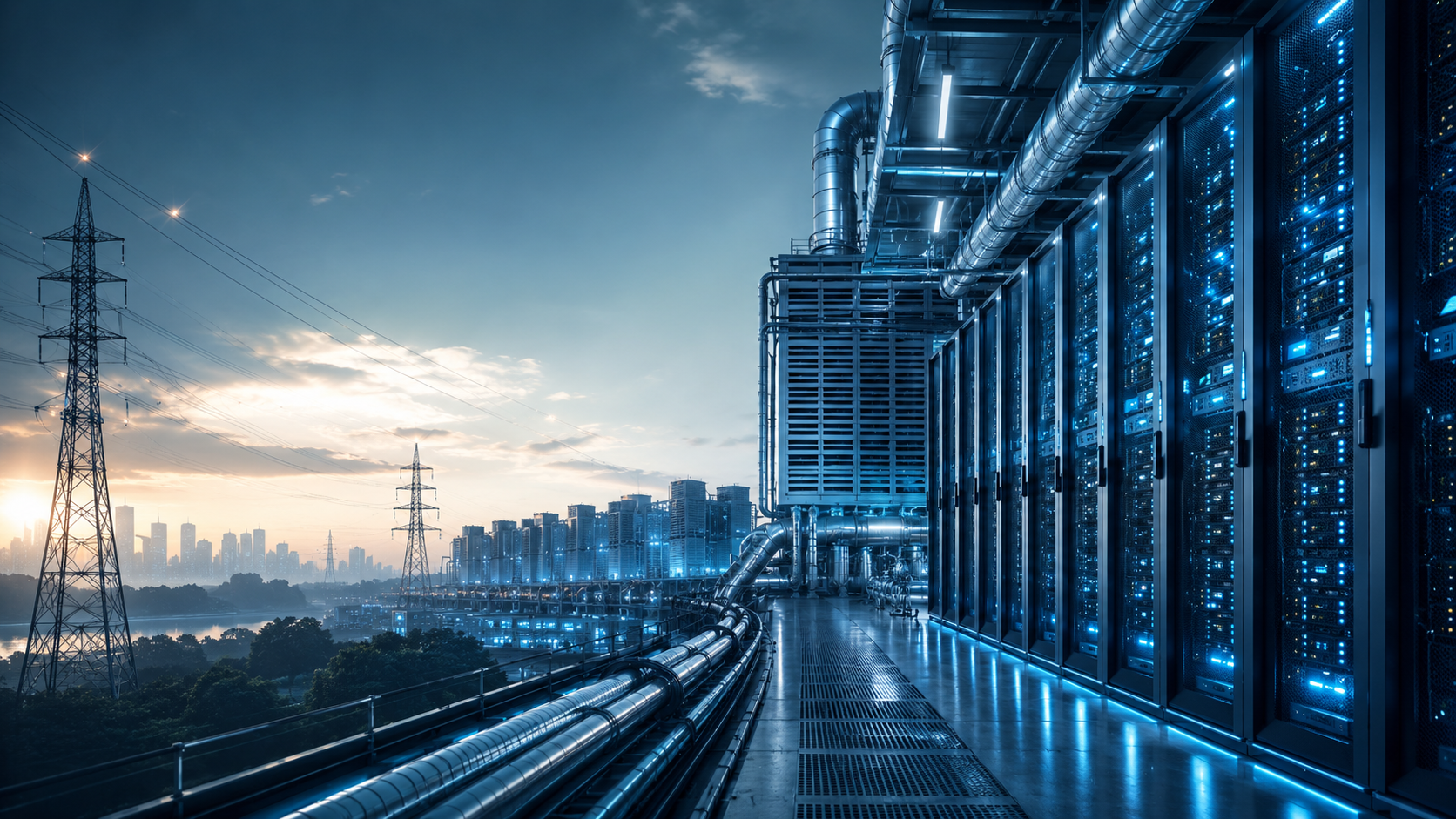
The answer is moving away from the chip itself and toward the physical world around it: electricity, cooling, land, construction, grid connections, transformers, generators, copper cables, energy management systems and data centers. AI no longer consumes only processors. It consumes heavy, expensive and slow-to-build infrastructure.
The numbers are huge. Different estimates suggest that 2026 AI infrastructure capex by hyperscalers and major data center players could reach roughly $600 billion to $750 billion, depending on which companies are included and how the spending is defined. BloombergNEF estimated that capex by the largest data center firms is approaching $750 billion in 2026, while TrendForce estimated that the top nine cloud service providers could reach $830 billion in capex. The exact number may change, but the direction is clear: this is no longer a technology experiment. It is a new industrial infrastructure cycle.
That is the core message for investors. The market is moving from “who makes the strongest chip” to “who enables these digital factories to actually run.” An AI data center is not a normal server room. It is an industrial facility that consumes enormous amounts of power, produces extreme heat and requires complex engineering. According to the International Energy Agency, global data center electricity consumption reached around 415 terawatt-hours in 2024, about 1.5% of global electricity consumption, after growing around 12% per year over the previous five years.
That means the next bottleneck may be less glamorous, but far more important: power and cooling. Deloitte noted that cooling can account for up to 40% of data center electricity demand, and AI data centers are especially heat intensive. As rack density rises, traditional air cooling becomes less effective, pushing the industry toward liquid cooling, direct-to-chip solutions, coolant distribution units, pumps, chillers and advanced thermal systems.
The Investment Direction
The best way to think about this is through the bottleneck value chain. If AI demand keeps growing, the money will not stay only with chipmakers. It will also flow to the companies that build, connect, cool and power the infrastructure.
The first area is power and grid infrastructure. This includes electrical equipment makers, transformers, power distribution systems, UPS systems, generators, high-voltage equipment, energy management solutions and utilities in regions where large data centers are being built. As data centers become major power consumers, companies that provide reliability, faster grid access and continuous power supply may earn a premium.
The second area is cooling. This may become one of the most interesting parts of the next wave because AI is changing the thermal profile of data centers. Companies that provide liquid cooling, chillers, industrial HVAC, pumps, water systems and thermal management solutions are positioned close to a problem that is becoming more urgent.
The third area is construction and physical infrastructure. Data centers are not built overnight. They require land, engineering, contractors, power systems, concrete, steel, copper, fiber connections, security and maintenance. The “picks and shovels” companies behind data center construction may benefit from sustained demand even if chip stocks become volatile.
The fourth area is data center operators and digital infrastructure companies. Companies that own data center assets, provide colocation, connectivity and fast capacity expansion may benefit from capacity shortages, especially in regions where power and land are constrained.
The fifth area is infrastructure metals and materials. Copper, electrical equipment, cables and grid components are becoming part of the AI story. Not every rise in demand translates immediately into stock gains, but for long-term investors this is a space worth tracking closely.
How to Spot the Next Opportunity
The simple rule is this: listen to what the largest companies complain about. When the CEOs of Microsoft, Google, Amazon, Meta and Nvidia talk about shortages, delays, rising costs or the need to accelerate investment, they may be pointing investors toward the next constraint.
There are three signals to watch.
First, demand stronger than supply. If companies say they cannot get enough components, enough power or enough capacity, that is the first sign.
Second, long-term contracts and prepayments. When customers are willing to reserve capacity years in advance, they are not buying a trend. They are trying to secure a scarce resource.
Third, pricing power. When suppliers begin to talk about better pricing, larger backlogs and improving margins, the bottleneck is starting to show up in financial results.
Bottom Line
The next big stock in technology does not have to be another software company or even another chipmaker. It may come from the gray, physical and engineering layer of the AI revolution: power, cooling, data centers, grid equipment, networking infrastructure and raw materials.
The HBM boom taught investors that the market rewards not only the company standing in the spotlight, but also the company that controls the part nobody can move forward without. In 2024, the bottleneck was memory and advanced packaging. In 2026, the biggest bottleneck may be much more basic: enough power, enough cooling and enough physical infrastructure to keep the AI dream running.
This is not investment advice. It is a framework. Investors looking for the next major opportunity should stop asking only “which company is the most innovative” and start asking “which part of the supply chain does everyone need, but nobody has enough of.”
Have a take on this?
Jump into the TradeTechAI Discord to discuss this article with other traders.
Written by
Admin User
Editor
Editor at TradeTechAI, covering market analysis, trading strategies, and portfolio insights.