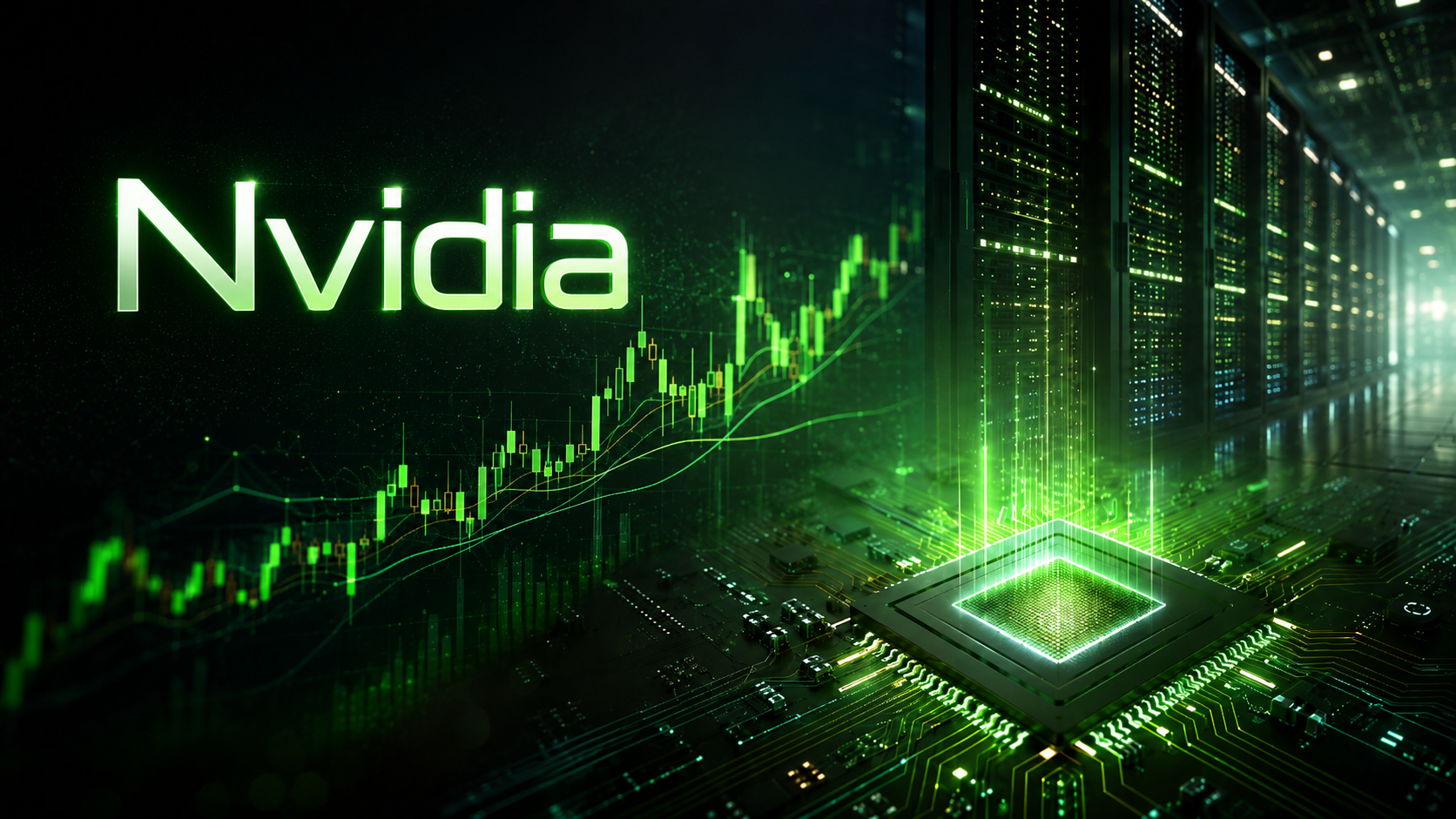
Nvidia has become much more than a chip company. It is now the main barometer for the entire artificial intelligence story on Wall Street. When Nvidia delivers, investors feel that the AI boom is still alive and accelerating. When it disappoints, even slightly, the pressure can spread quickly across semiconductors, mega-cap tech, data centers, power infrastructure and almost every stock connected to the AI theme.
What the market expects
Expectations are extremely high.
Wall Street is looking for revenue of roughly 79 billion dollars, adjusted earnings per share around 1.75 to 1.78 dollars, and year-over-year revenue growth close to 80 percent.
Those are extraordinary numbers for a company that is already one of the largest in the world. But Nvidia’s challenge is not that it is failing to grow. The challenge is that investors have become used to exceptional growth, and the bar has become brutally high.
The most important part of the report will be the data center business. That is the heart of the AI cycle. Investors will want to see revenue around 73 billion dollars or higher from that segment, along with strong commentary about demand for Blackwell, Nvidia’s next major AI chip platform.
Still, even strong current-quarter numbers may not be enough. The key number will likely be guidance for the next quarter. The market is expecting revenue in the area of 86 to 87 billion dollars. Guidance above 88 or 90 billion dollars could be received very positively. Guidance too close to consensus may be treated as a disappointment, even if the reported numbers are strong.
Why this report matters so much
Nvidia sits at the center of a massive value chain.
It does not only influence semiconductor stocks. It also affects cloud providers, server makers, cooling companies, power infrastructure names, networking equipment suppliers, data center operators and even parts of the bond market that help finance the huge AI infrastructure buildout.
Microsoft, Amazon, Google, Meta and Oracle are still spending enormous amounts on AI infrastructure, and Nvidia remains one of the biggest beneficiaries of that spending cycle.
That is why this report is a pulse check for the entire AI trade.
Investors will not simply ask whether Nvidia sold more chips. They will ask a much bigger question: are the world’s largest technology companies still accelerating their AI investments, or are they starting to become more cautious after a massive spending wave?
What to watch in the report
The first number to watch is total revenue. A figure above 79 billion dollars would be positive, but not necessarily enough to lift the stock. With Nvidia, the market usually wants a meaningful beat.
The second and more important number is data center revenue. If that segment comes in clearly ahead of expectations, it would support the view that AI demand is still running ahead of supply.
The third key item is gross margin. Nvidia has enjoyed exceptionally high gross margins in recent years, around the mid-70 percent area. Any sign of margin pressure could raise concerns about competition, production costs or a shift in product mix.
The fourth issue is Blackwell. Investors will want to hear that production is progressing well, that there are no major bottlenecks, and that customer demand remains strong.
The fifth issue is China. Export restrictions have already hurt Nvidia’s business in the past. The market will want to understand whether the company has alternative products, possible regulatory relief, or continued pressure from restrictions on sales to China.
What the options market is pricing in
The options market is pricing in a move of roughly 6.5 percent after the report.
For Nvidia, that kind of move can add or erase hundreds of billions of dollars in market value in a single session.
That tells us the market is preparing for a major event. Not only for Nvidia, but for the entire AI and semiconductor complex. A sharp move in Nvidia can quickly affect the Nasdaq, QQQ, SOXX and stocks such as AMD, Broadcom, Micron, Marvell, Super Micro, Dell, Vertiv and the broader data center ecosystem.
The bullish scenario
In the bullish scenario, Nvidia beats revenue expectations, delivers a very strong data center number, maintains high gross margins and gives powerful guidance for the next quarter.
If management speaks confidently about Blackwell demand, strong orders from cloud customers and demand that still exceeds supply, the market may see it as another confirmation that the AI cycle is far from over.
In that case, the positive reaction could extend well beyond Nvidia. Semiconductor stocks, data center equipment companies, power and cooling names, and even some AI-related software stocks could benefit from the improved sentiment.
The bearish scenario
The dangerous scenario is not necessarily a bad report. The more realistic risk is a good report that is simply not good enough.
Nvidia can beat expectations and still fall if forward guidance is too conservative, if margins show weakness, or if management hints at supply constraints, delays, slower demand or a bigger impact from China.
That is the risk with a stock priced for perfection. When the market already believes the company is excellent, ordinary excellence may not be enough. Nvidia needs to surprise positively.
Impact on the broader market
A very strong report could bring momentum back to the Nasdaq and growth stocks. It could strengthen the argument that AI infrastructure spending is still in an early stage and that the largest cloud companies will continue pouring capital into this cycle.
A disappointing report, on the other hand, could trigger a broader pullback. The pressure would likely be strongest in stocks that have already rallied sharply on the AI story, even if their connection to Nvidia is indirect.
The macro backdrop also matters. Higher bond yields can weigh on expensive growth stocks. So even a good Nvidia report will still have to face a market environment where interest rates and valuations remain important.
Bottom line
Nvidia’s report tonight is more than a company event. It is a confidence test for the entire artificial intelligence story on Wall Street.
The market is not simply trying to find out whether Nvidia is a great company. That is already understood. The real question is whether the growth rate is still accelerating, whether customers are still ordering aggressively, and whether the AI boom is still in its early innings rather than entering a phase where expectations have moved too far, too fast.
In simple terms, Nvidia is not only reporting on the last quarter tonight. It is reporting on the health of Wall Street’s biggest dream.
Have a take on this?
Jump into the TradeTechAI Discord to discuss this article with other traders.
Written by
Admin User
Editor
Editor at TradeTechAI, covering market analysis, trading strategies, and portfolio insights.