
Demand for chips and computing power remains strong, but free cash flow is under pressure and depreciation is set to rise
The key question is not which company spends the most, but which one can convert that spending into revenue, profit and attractive returns on capital
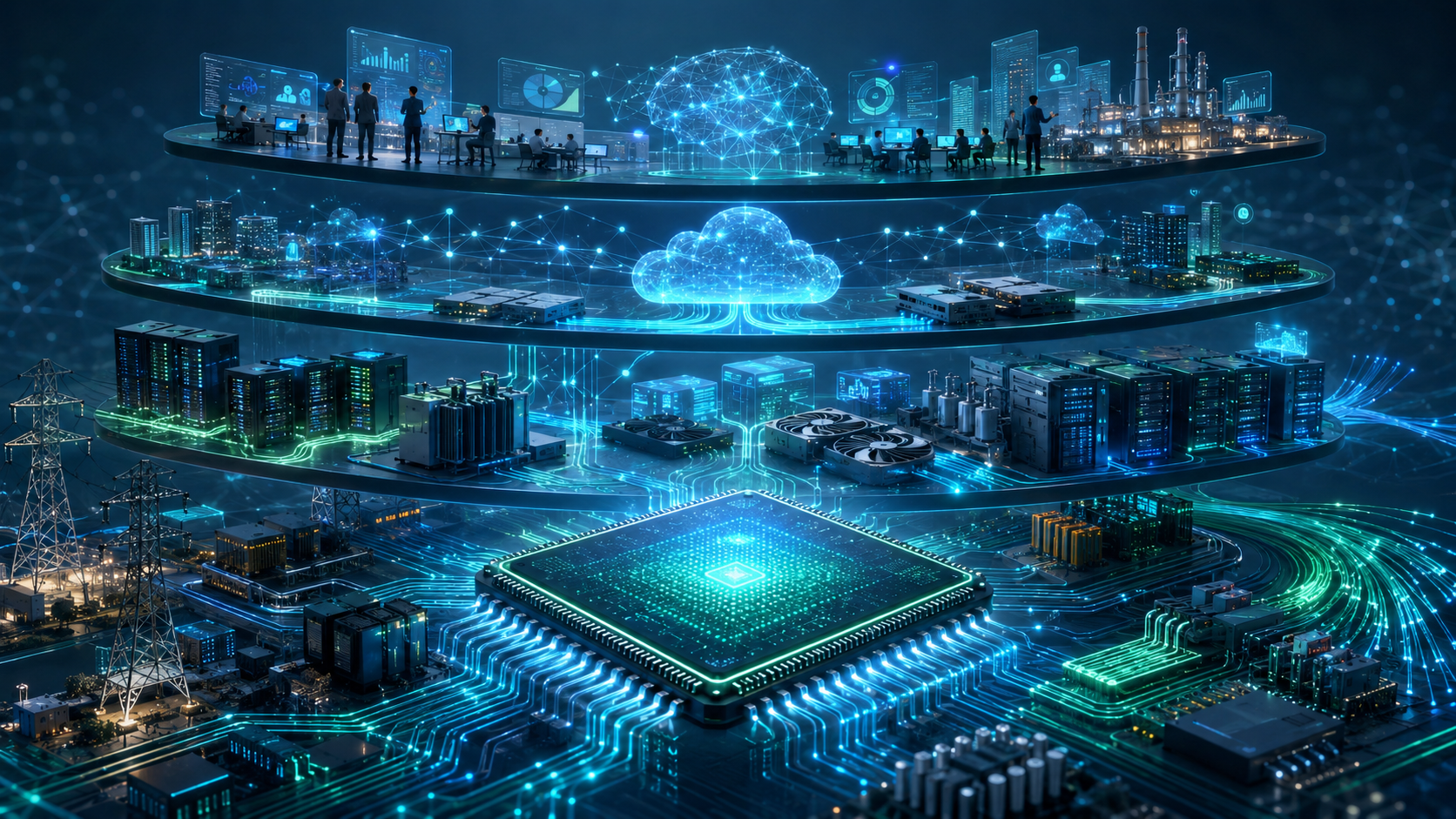
A few years ago, the largest technology companies competed for users, digital advertising and cloud customers. Today, they are increasingly competing for something far more physical: chips, electricity, land, cooling systems, fiber connections and data centers.
The artificial intelligence revolution has transformed some of the world’s largest software companies into some of its largest infrastructure investors.
Amounts once associated with governments, energy companies or national infrastructure projects are now being deployed by a handful of technology companies in a single year.
Amazon expects approximately $200 billion of capital expenditures in 2026. Alphabet raised its guidance to between $180 billion and $190 billion. Meta expects to spend between $125 billion and $145 billion. Microsoft invested $31.9 billion in its latest quarter, following $37.5 billion in the previous quarter. Oracle finished fiscal 2026 with negative free cash flow of $23.7 billion, primarily because of its aggressive cloud infrastructure expansion.
On a rough annualized basis, these five companies are investing at a pace approaching $700 billion.
Investors understand why the companies are spending. What they do not yet know is how long it will take for that money to come back.
What Is CAPEX?
CAPEX, or capital expenditures, is money invested in assets that are expected to support a company for several years.
For large technology companies, this includes data centers, servers, GPUs, CPUs, custom processors, networking equipment, electrical systems, cooling facilities, buildings and land.
CAPEX differs from an ordinary operating expense. Salaries and electricity costs are generally recognized immediately in the income statement. When a company builds a data center, the asset is recorded on the balance sheet and its cost is recognized gradually through depreciation.
The surge in CAPEX therefore does not reduce reported profit by the full amount immediately. It initially affects free cash flow. Later, it also affects earnings through depreciation, maintenance, power consumption and data center operating costs.
An investor focusing only on earnings per share may therefore underestimate the size of the bet.
The AI Arms Race
From the perspective of the technology giants, failing to invest may be more dangerous than investing too much.
A company that lacks computing capacity could lose cloud customers, fall behind in model development, deliver slower products and become dependent on competitors’ technology.
The companies are not building only for current demand. They are constructing infrastructure for demand they expect to arrive in 2027, 2028 and beyond.
Amazon is a good example. The company expects to invest approximately $200 billion in 2026. At the same time, AWS revenue grew 28% in the first quarter to $37.6 billion, while AWS operating income reached $14.2 billion.
Amazon has indicated that much of the AWS infrastructure funded in 2026 will be monetized during 2027 and 2028.
There is therefore a structural gap between the moment cash is spent and the moment the investment begins generating a return.
Amazon: The Largest Investment, but a Clear Commercial Engine
Amazon’s capital budget is not limited to data centers. It also includes logistics, robotics, custom chips, satellite communications and retail infrastructure.
Artificial intelligence, however, is one of the main reasons spending has accelerated.
For the twelve months ending March 2026, Amazon’s operating cash flow increased 30% to $148.5 billion. Nevertheless, free cash flow fell to just $1.2 billion, primarily because purchases of property and equipment increased by $59.3 billion, largely reflecting AI investment.
This illustrates both sides of the story. Amazon’s operations are generating more cash, but much of that additional cash is immediately being reinvested.
Amazon’s advantage is that it already has a proven commercial mechanism. AWS sells computing power and AI services to thousands of companies, while both cloud revenue and operating profit are growing rapidly.
The risk is that capacity is built faster than demand grows, or that cloud price competition reduces the return earned on each dollar invested.
Alphabet: The Return Does Not Have to Come Only From Google Cloud
Alphabet expects to invest between $180 billion and $190 billion in 2026 and has said that 2027 capital expenditures are likely to increase significantly again.
Management cited unprecedented internal and external demand for AI computing resources.
Alphabet does not have to rely solely on Google Cloud to generate a return.
Google Cloud can sell computing power, storage, AI tools and TPU capacity. Search can use AI to defend its competitive position. YouTube can improve recommendations and advertising. Gemini can become a paid consumer and enterprise product. AI can also improve advertising efficiency, conversion rates and pricing.
The same infrastructure can therefore support several revenue engines simultaneously.
There is also a risk. Generating sophisticated AI answers is more expensive than displaying traditional search links. Usage may grow faster than monetization, causing revenue to increase while margins decline.
Microsoft: Demand Is Real, but the Cost of Growth Is Rising
Microsoft invested $31.9 billion in the third quarter of fiscal 2026. Approximately two thirds of the spending was allocated to shorter-lived assets, primarily GPUs and CPUs. The remainder was invested in long-lived assets, including data center infrastructure that may support monetization for 15 years or more.
That distinction matters.
A data center site may remain useful for decades. AI chips can become technologically outdated within a few years. Microsoft may therefore need not only to invest heavily today, but also to replace a meaningful portion of its equipment regularly.
The commercial indicators remain strong. Microsoft Cloud revenue reached $54.5 billion during the quarter and grew 29%. Total commercial remaining performance obligations reached $627 billion, while Azure continued to expand rapidly.
However, Microsoft Cloud’s gross margin declined as a result of continued AI investment.
Microsoft is not building infrastructure without demand. The demand is visible, but the cost of supplying it is rising.
Meta: AI Does Not Have to Be Sold Directly to Be Profitable
Meta is a different case.
The company does not need to sell cloud services to earn a return from AI. It can use AI to improve recommendations on Facebook and Instagram, increase user engagement, improve advertising targeting and raise conversion rates.
Meta’s first-quarter 2026 revenue rose 33% to $56.3 billion, while the average price per advertisement increased by 12%. At the same time, the company raised its annual CAPEX guidance to between $125 billion and $145 billion.
For Meta, the return may appear indirectly through greater engagement, more advertising inventory, higher prices per advertisement, improved advertiser results and lower development or operating costs.
Meta’s advantage is that it operates an advertising business with very high margins. Even a small improvement in advertising effectiveness can generate billions of dollars in incremental revenue.
The risk is that some spending is directed toward research, open models and long-term capabilities that cannot be directly linked to revenue. Not every data center or AI model has a clearly measurable standalone return.
Oracle: Growth Comes With Leverage and Dilution Risk
Oracle provides the clearest example of the financial risks involved.
The company generated $32 billion in operating cash flow during fiscal 2026, but free cash flow was negative $23.7 billion as it invested heavily in cloud infrastructure.
Oracle raised $43 billion in debt and $5 billion in equity during fiscal 2026. It expects to raise approximately another $40 billion through a combination of debt and equity during fiscal 2027.
The positive side is that Oracle’s remaining performance obligations reached $638 billion. Much of the increase came from large AI contracts. In some cases, customers prepaid for GPUs or supplied the hardware themselves, reducing Oracle’s funding requirements.
The risk is that shareholders must consider not only operating growth, but also financing costs, additional debt and possible dilution.
An investment can be successful operationally but less attractive per share if much of the return goes to creditors or is divided among a larger number of shares.
ROI and ROIC: Similar, but Not the Same
ROI, or return on investment, is generally used to evaluate a particular project:
ROI = Profit generated by the investment divided by the cost of the investment
Suppose a company invests $10 billion in data centers and the project produces $15 billion of cumulative profit above its operating costs. The total ROI would be 50%.
The calculation is more difficult for technology companies because a single data center may simultaneously support cloud services, search, advertising, product development and internal applications.
Investors therefore also examine ROIC, or return on invested capital:
ROIC = Net operating profit after tax divided by invested capital
ROIC measures how efficiently a company converts the capital invested in its business into operating profit.
A company generally creates value when its ROIC is higher than its cost of capital. It can grow rapidly and still destroy value if each new dollar invested earns less than the cost of financing and the risk assumed.
Why Can ROIC Fall Even When Revenue Is Growing?
Invested capital increases immediately when the company builds data centers and purchases equipment. The associated profit usually arrives later.
During the early stages of a large investment cycle, the denominator in the ROIC calculation can rise faster than the numerator.
ROIC may therefore decline temporarily even while revenue and operating profit continue to grow.
That is not necessarily a problem. A temporary decline may be justified if the infrastructure produces substantial earnings for many years.
However, if operating profit fails to catch up with the increase in invested capital after several years, the company may have overbuilt or competition may have damaged pricing.
The Delayed Risk: Depreciation
Today’s CAPEX becomes tomorrow’s depreciation expense.
Once data centers and servers are placed into service, depreciation begins to reduce operating profit.
Alphabet has warned that its technical infrastructure expansion will pressure the income statement through higher depreciation, energy costs and data center operating expenses. Microsoft has also reported pressure on cloud gross margins from AI investment.
The market may tolerate weaker free cash flow for a year or two. It may be less forgiving if margins also begin to decline without a sufficient acceleration in revenue.
How Is the Money Supposed to Come Back?
There are four primary paths to monetization.
The first is the direct sale of computing capacity and cloud services through AWS, Azure, Google Cloud and Oracle Cloud.
The second is the sale of paid AI products such as Copilot, Gemini and enterprise AI tools.
The third is improving existing products. Better advertising, recommendation systems or software features can increase revenue even when customers do not pay separately for AI.
The fourth is cost reduction. Automation in software development, customer service, sales and operations can improve profit without requiring additional revenue.
The strongest companies will be able to monetize their infrastructure through several of these channels at the same time.
What Should Investors Examine in Each Earnings Report?
Cloud and AI revenue growth
Revenue should grow at a rate that justifies the increase in assets and depreciation. Slowing cloud growth combined with accelerating CAPEX would be a warning sign.
Free cash flow
Free cash flow shows how much cash remains after capital expenditures. A temporary decline is not automatically negative. The key question is whether the money is funding productive growth or simply maintaining competitive relevance.
Backlog and customer commitments
RPO, long-term contracts and advance commitments indicate whether infrastructure is being built against visible demand rather than hope.
Cloud gross margins
Revenue can rise rapidly while profitability declines if chip, power and depreciation costs increase even faster.
CAPEX relative to operating cash flow
Companies that fund spending internally expose shareholders to less financing risk. When debt or equity issuance is required, interest expense and dilution must be considered.
Depreciation relative to CAPEX
A large gap between current CAPEX and depreciation suggests that a meaningful portion of the accounting impact is still ahead.
ROIC over time
An immediate improvement should not be expected. Over several years, however, operating profit after tax should begin rising relative to the capital invested.
Which Company Is Best Positioned?
Microsoft and Amazon operate large cloud platforms, have substantial customer commitments and already receive direct payments for computing capacity.
Alphabet can monetize the same infrastructure through cloud, search, advertising and consumer applications.
Meta does not operate a comparable public cloud business, but it can generate high returns by improving its existing advertising engine.
Oracle is delivering strong growth and has an enormous backlog, but it is taking greater financial risk through debt and equity financing.
There is no clear winner. Each company has a different monetization path, and each carries a different type of risk.
Are We Heading Toward a Bubble?
Not every major investment cycle is a bubble.
During the internet boom, too much infrastructure was built too early. Many of the companies that financed it failed, but the fiber networks, data centers and communications infrastructure they created became the foundation of the digital economy.
A similar outcome is possible in AI. Demand may be genuine and the economic impact may be enormous, while some companies still pay too much to build the required infrastructure.
Even if AI changes the world, that does not guarantee that every data center, every chip and every technology stock will generate an attractive return.
The Bottom Line
The market is not questioning whether artificial intelligence matters. It is trying to understand its economics.
Will customers pay enough for computing capacity? Will AI products create new revenue or merely increase the cost of existing services? Will chip and electricity costs decline? Will data centers operate at high utilization rates? Will the resulting return exceed the cost of capital?
The difference between the winning and disappointing technology stocks will not be determined only by model quality or user numbers.
It will be determined by the companies’ ability to turn hundreds of billions of dollars of concrete, electricity and silicon into free cash flow and attractive returns on invested capital.
Have a take on this?
Jump into the TradeTechAI Discord to discuss this article with other traders.
Written by
Admin User
Editor
Editor at TradeTechAI, covering market analysis, trading strategies, and portfolio insights.