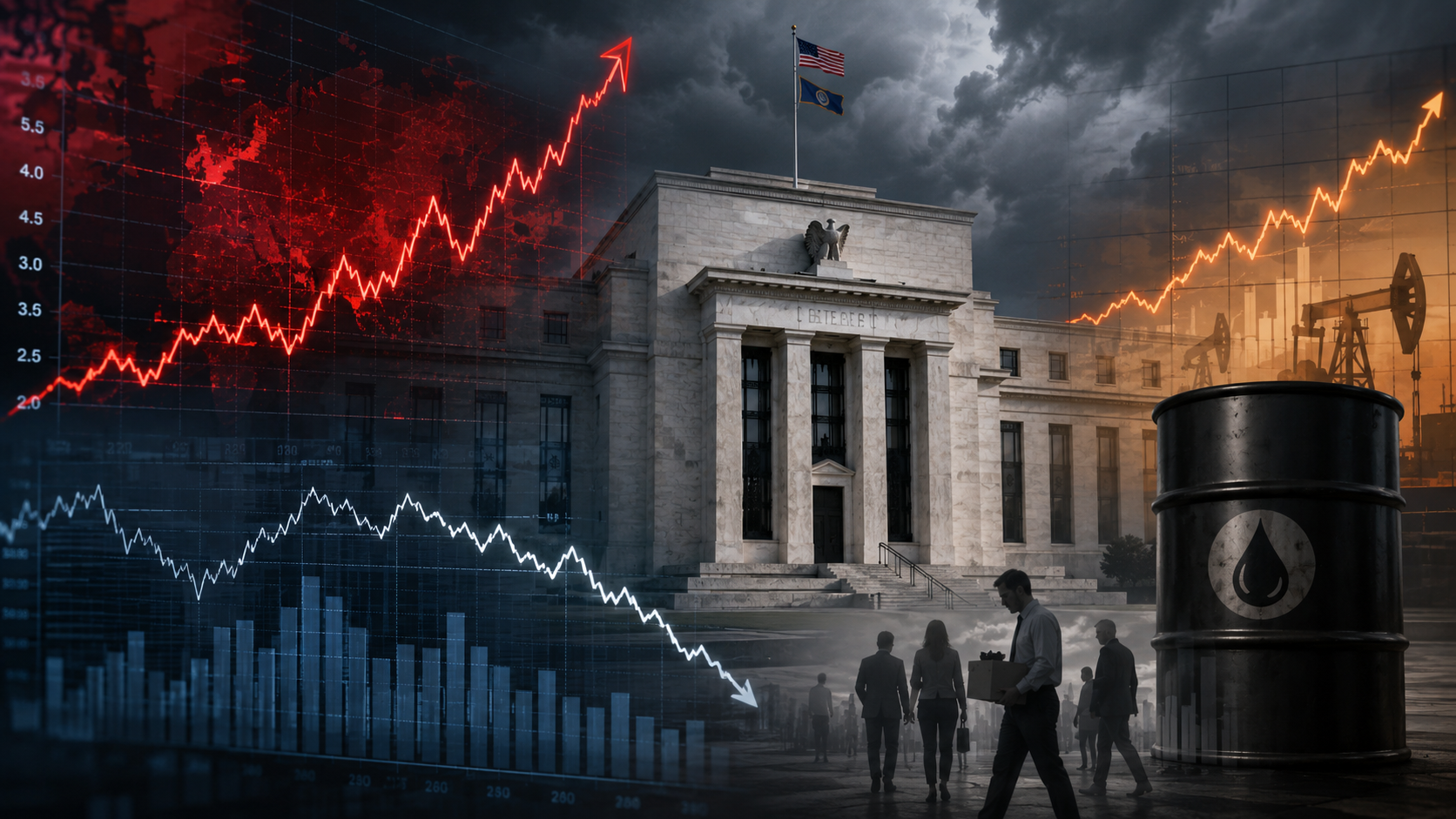

For years, investors have been accustomed to thinking of U.S. Treasury bonds as the safest asset in the world. When fear increased, investors bought Treasuries, bond prices rose, and yields fell. But recently, something more interesting has been happening: at the long end of the yield curve, investors are demanding increasingly higher compensation to hold U.S. government debt.
The yield on the 30-year U.S. Treasury has recently moved close to 5.25%, a level not seen since 2007. The 10-year Treasury yield is also trading around 4.7%. These are no longer minor fluctuations in the bond market. They represent the cost of capital on which much of the U.S. financial system is built — from mortgages to the valuation of technology companies.
The important question is why long-term yields remain so high, especially at a time when there are also signs of some cooling in the labor market. The answer is that a 30-year bond reflects much more than expectations for what the Federal Reserve will do at its next meeting. An investor buying a 30-year Treasury must think about inflation, fiscal deficits, debt levels, future bond issuance, and the possibility that the dollar and the U.S. economy may look very different ten or twenty years from now.
And this is where the major change is taking place.
The bond market is beginning to demand a higher term and risk premium from the United States.
One way to see this is through the term premium — the additional compensation investors require for taking the risk of holding a long-duration bond rather than continuously rolling over shorter-term securities. In other words, the rise in long-term yields is not driven only by expectations for higher interest rates. Investors also want additional compensation simply for committing their money for a much longer period.
Behind this concern lies, first and foremost, America's fiscal arithmetic. U.S. federal debt held by the public is now around the size of the country's annual economic output and is projected to continue rising over the coming decade. The implication is straightforward: the U.S. government will need to issue enormous amounts of Treasury securities to finance future deficits and refinance existing debt.
And when the supply of bonds rises, someone has to buy them.
If demand does not increase at the same pace, the government must offer investors a more attractive price for their money — meaning a higher yield. The sheer scale of ongoing Treasury issuance is therefore becoming an increasingly important force in the bond market.
Inflation adds another layer to the problem. Renewed increases in oil prices and geopolitical uncertainty have revived concerns that inflation may not disappear as quickly as investors had hoped. If an investor believes average inflation over the next decade will be higher, that investor will not be willing to lend money to the U.S. government for ten or thirty years at the same yield accepted in the past. The investor will demand more.
This is precisely where the bond market begins to affect the stock market.
When investors can earn more than 5% on a long-term U.S. government bond, the competition for capital changes dramatically. Investors no longer need to take substantial equity-market risk simply to earn a reasonable nominal return. As the so-called risk-free rate rises, the discount rate used to value companies also rises — and the present value of future earnings declines.
The impact is particularly significant for growth companies. A technology company whose valuation depends heavily on profits expected five, ten, or even fifteen years into the future is far more sensitive to changes in bond yields than a company producing strong cash flow today.
This is one reason why rising long-term yields can become a problem for the Nasdaq and AI-related stocks even when corporate earnings continue to grow.
Real estate is also highly sensitive to long-term rates. Higher Treasury yields push mortgage rates higher and increase financing costs for real-estate companies and REITs. The same dynamic affects infrastructure projects, leveraged companies, private equity transactions and virtually every corner of the economy that depends on long-term financing.
But there is an even deeper issue here.
For many years, the bond market was mainly asking one question:
What will the Fed do next?
Today, it is increasingly asking another:
How much debt will the U.S. government need to issue — and what yield will investors require to own it?
That is a significant shift.
The Federal Reserve controls short-term interest rates, but it does not directly determine the yield on 10-year or 30-year Treasury bonds. If investors demand a higher risk premium because of inflation, deficits, debt or excessive bond supply, long-term yields can remain elevated even if the Fed eventually begins cutting short-term rates.
This is also why the shape of the yield curve has become especially important. When short-term yields decline while long-term yields remain elevated or rise, the curve steepens. That can be interpreted as a signal that investors are becoming less concerned about the next Fed meeting and more concerned about long-term inflation, fiscal policy and government borrowing.
For equity investors, there is therefore a very good reason to start watching the bond market every morning.
The 10-year Treasury yield is effectively one of the fundamental prices of the global financial system. If it begins to fall despite current concerns, growth stocks may receive a significant tailwind. If it breaks above recent highs and remains there, valuation pressure could intensify.
But the 30-year Treasury yield may currently be even more interesting.
It is less dependent on whether the Fed raises or lowers rates at its next meeting and more dependent on a much bigger question: how much confidence do investors have that the United States can keep inflation, debt and fiscal deficits under control over the long term?
The message coming from the bond market is therefore not necessarily that the United States is heading toward a debt crisis. That conclusion would go too far.
The message is simpler — and potentially far more important for investors:
The world is still willing to lend money to the United States. It is simply demanding a higher price to do so.
And when the price of money rises, sooner or later almost every financial asset in the world has to be repriced.
Have a take on this?
Jump into the TradeTechAI Discord to discuss this article with other traders.
Written by
Admin User
Editor
Editor at TradeTechAI, covering market analysis, trading strategies, and portfolio insights.