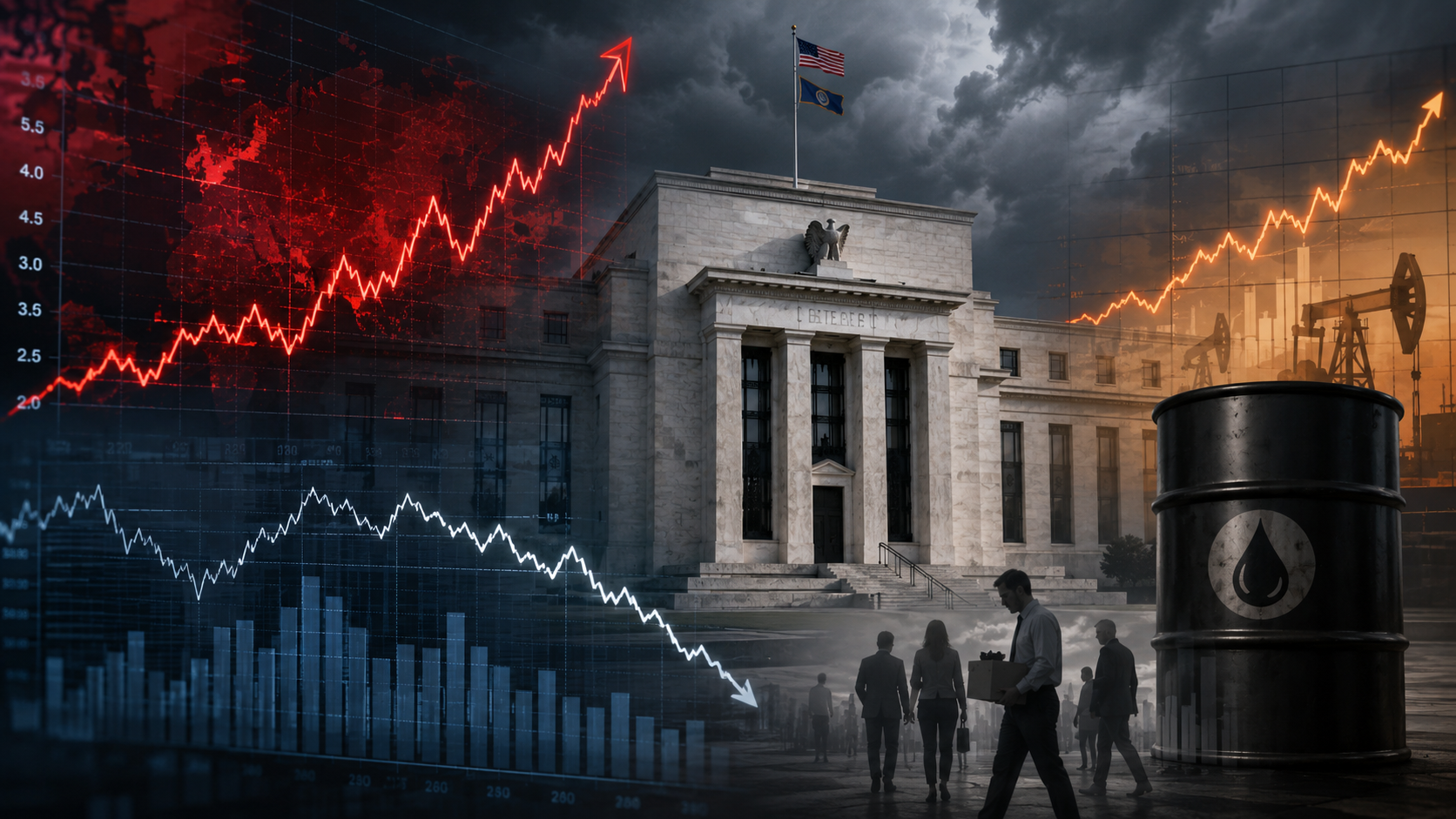
Wall Street is once again confronting one of the most difficult situations a central bank can face: the U.S. economy is beginning to show signs of cooling, while inflation remains too high for the Federal Reserve to declare victory.
In simple terms, the Fed may soon have to choose between two risks: continue fighting inflation with higher interest rates and potentially weaken growth and employment further, or wait and risk allowing inflation to become entrenched again.
The latest labor-market data highlights the dilemma. According to ADP, U.S. private employers added only 38,000 jobs in August, below expectations for roughly 48,000. Manufacturing lost 17,000 jobs while professional and business services lost 16,000. The labor market is far from collapsing, and unemployment remains relatively low, but hiring momentum is clearly slowing.
The Federal Reserve's Beige Book tells a similar story. Economic activity continued to expand, but only modestly, while employment increased slightly. At the same time, businesses continue to report elevated costs, particularly for energy, raw materials and manufacturing inputs.
That brings us to the Fed's biggest problem: inflation remains well above its 2% target. The Personal Consumption Expenditures index, the Fed's preferred inflation gauge, stood at an annual rate of 3.7% in July. Fed officials have described recent inflation readings as mixed, but there is still insufficient evidence that inflation is moving sustainably back toward target.
Oil is making the problem even more complicated. Renewed tensions involving Iran have pushed U.S. crude back toward and above $90 a barrel. Higher oil prices do not only affect gasoline. They feed through transportation, manufacturing, agriculture, airlines and global supply chains, potentially creating another wave of inflationary pressure just as the Fed is trying to finish its inflation fight.
Markets have reacted quickly. Futures now imply roughly a 62%–67% probability of a 25-basis-point rate hike in September, up sharply from around 37% only a week earlier.
Fed Chair Kevin Warsh reinforced the hawkish message at Jackson Hole, stressing that policymakers would need to act if they lacked confidence that inflation was returning toward 2%. Barclays subsequently changed its forecast and now expects quarter-point rate increases in both September and December.
Would the Fed really raise rates while the economy is slowing?
Yes — if policymakers conclude that inflation poses the greater threat.
The Federal Reserve has a dual mandate: price stability and maximum employment. Under normal conditions, these goals are not necessarily in direct conflict. But when inflation remains high while growth and employment begin weakening, monetary policy becomes significantly more difficult.
If the labor market continues to lose momentum while oil and inflation remain elevated, the Fed effectively has to decide which pain it is willing to tolerate.
Raising rates could weaken the economy further, increase borrowing costs for households and companies and pressure financial markets. But failing to tighten while inflation remains elevated risks damaging the Fed's credibility and allowing inflation expectations to become embedded again.
That is one of the scenarios central bankers fear most.
What does this mean for markets?
For equities, the combination of higher rates and weaker growth is particularly challenging.
Higher interest rates increase the discount rate investors apply to future earnings, which tends to hurt highly valued growth companies most. At the same time, weaker economic growth can reduce the earnings themselves.
In other words, stocks could face pressure from both directions: lower valuation multiples and slower profit growth.
The bond market sits at the center of the story. The U.S. 10-year Treasury yield has recently moved toward the 4.8%–5% area as investors demand greater compensation for inflation, fiscal deficits and longer-term risk. As long as yields remain elevated, bonds become a stronger alternative to equities while raising the cost of capital throughout the financial system.
Gold presents a more complex picture. Higher rates and bond yields normally create a headwind for an asset that pays no interest. Yet concerns over inflation, government deficits, geopolitical risk and monetary-policy uncertainty continue to support demand. Gold has returned above $4,400 an ounce this week.
The real test comes next
The next major test will be Friday's official U.S. employment report. Following the relatively weak ADP reading, investors will be watching closely for confirmation that the labor market is losing momentum.
A very weak jobs report could sharply reduce expectations for a September rate hike and push Treasury yields lower.
A strong employment report, however — particularly alongside elevated inflation and oil above $90 — could give the Fed the justification it needs to raise rates at its September 15–16 meeting.
So the key question is no longer simply whether the U.S. economy is slowing.
For investors, the more important question is whether it is slowing fast enough to stop the Fed — or too slowly to prevent another rate increase while inflation remains elevated.
Have a take on this?
Jump into the TradeTechAI Discord to discuss this article with other traders.
Written by
Admin User
Editor
Editor at TradeTechAI, covering market analysis, trading strategies, and portfolio insights.